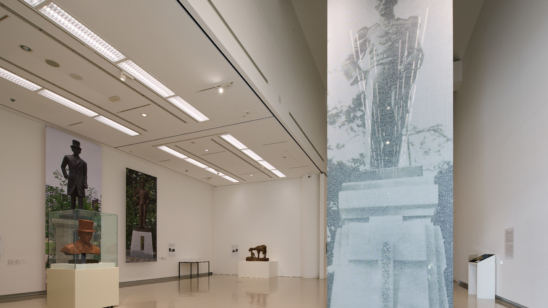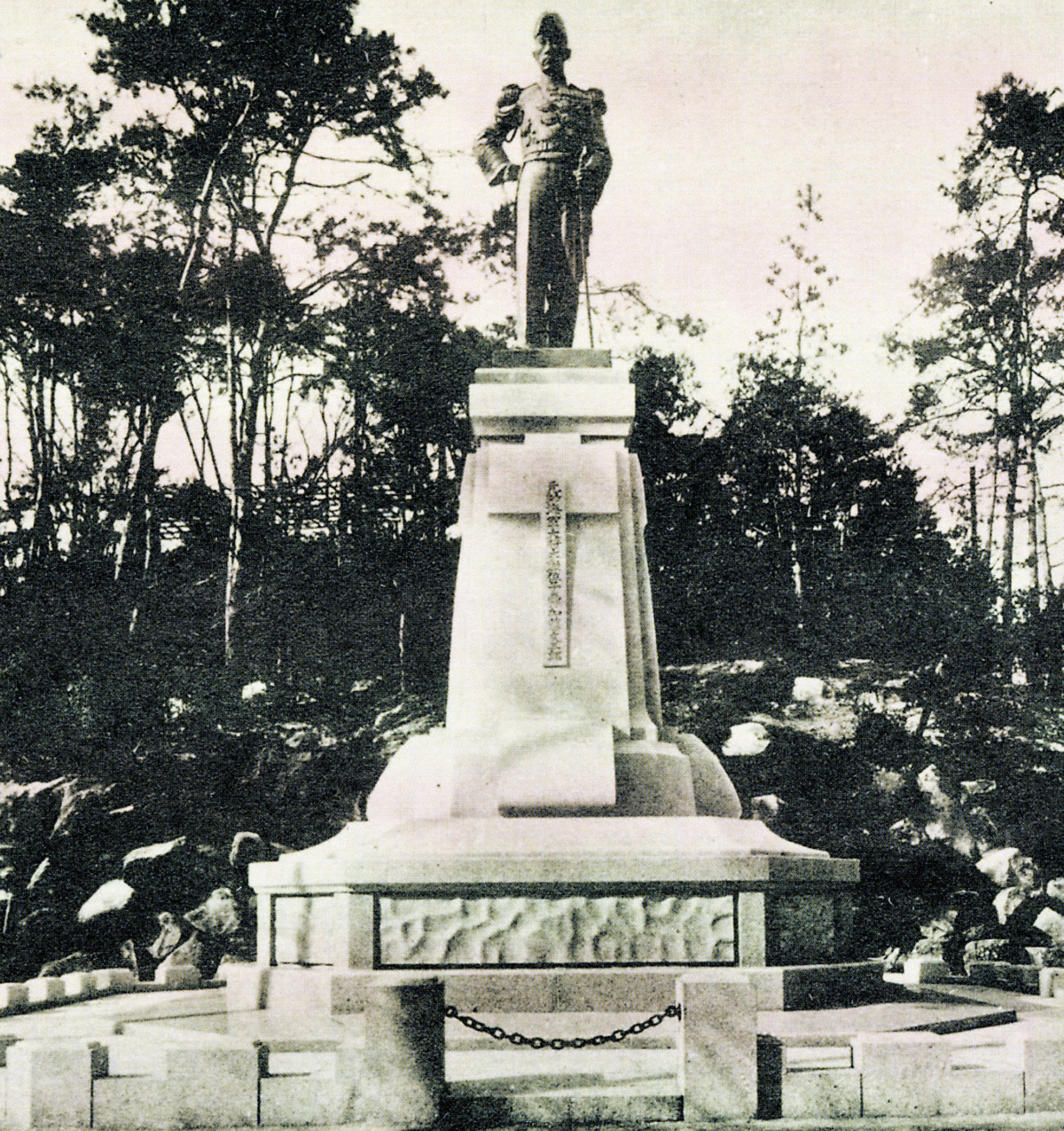
UEDA Naoji
1880-1953, born in Hiroshima Prefecture
Ueda was born in Kure to a family of shrine carpenters. In 1903, he saw a work by Yamazaki Choun at the Fifth National Industrial Exposition and decided to become a sculptor, but he was conscripted the following year with the outbreak of the Russo-Japanese War. After the war, around 1907, he moved to Tokyo, where he first studied wood carving under Yamazaki Choun, then trained in clay modeling under Asakura Fumio, and continued his studies at the Taiheiyo Art Association Laboratory. In 1911, he was selected for the first time for the 5th Bunten (Ministry of Education Art Exhibition), and he subsequently continued to show his work mainly at government-sponsored exhibitions. From 1926, he began working with goats as a recurring motif. His Mother and Child Goat (1930), submitted to the 11th Teiten (Imperial Art Exhibition), won a special prize and was acquired by the Imperial Household Ministry. He also produced portrait sculptures, but many of his cast bronze works were lost during the war due to metal requisitioning.